
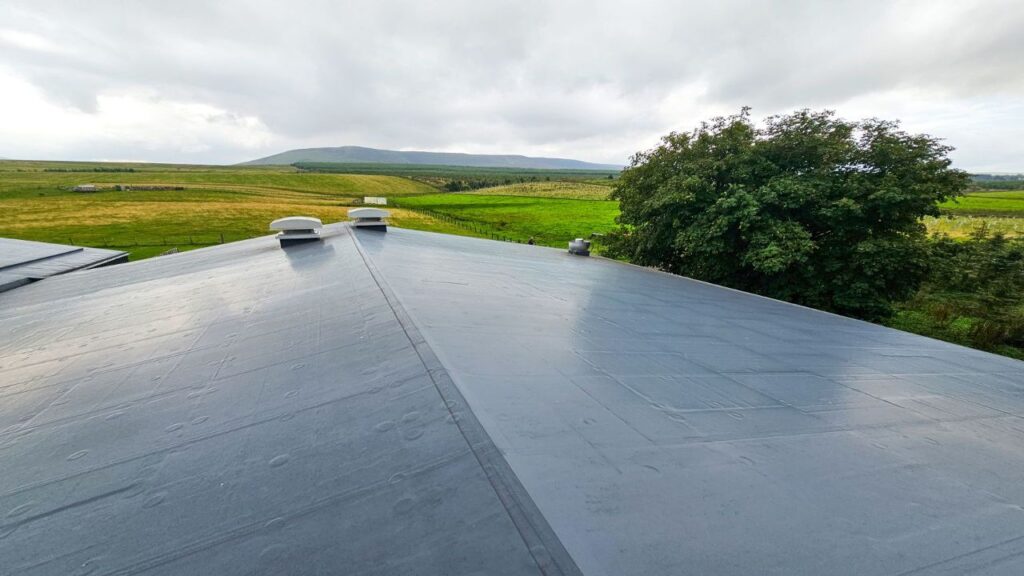
Single ply membrane roofing has become one of the most popular roofing systems for commercial and industrial buildings due to its durability, flexibility, and cost-effectiveness. This modern roofing solution is designed to provide long-term protection while remaining lightweight and easy to install. In this guide, we, at Redding Roofing Company, will explain what is single ply roofing, how it works, its benefits, types, installation process, maintenance, and why it is an excellent choice for many properties.
What Is Single Ply Roofing?
To understand what is single ply roofing, it helps to look at its structure. Single ply roofing is a roofing system made from flexible sheets of synthetic materials that are installed in a single layer over a roof deck. Unlike traditional built-up roofs that use multiple layers of asphalt and felt, a single ply membrane roof relies on one continuous layer to provide waterproofing and protection.
These membranes are manufactured in large sheets, reducing the number of seams and minimizing the risk of leaks. Because of their flexibility, they can adapt to temperature changes and building movement without cracking or splitting.
What Is Single Ply Membrane Roofing?
So, what is single ply membrane roofing exactly? It is a roofing system that uses a specially engineered roofing membrane as the primary barrier against water, UV rays, and weather elements. The membrane is typically made from rubber, thermoplastics, or other synthetic materials designed for long-lasting performance.
A single ply membrane roof is commonly used on flat or low-slope roofs, making it ideal for warehouses, offices, shopping centers, hospitals, and schools. Its lightweight nature puts less stress on the building structure, which is another reason for its widespread use.
Understanding the Roofing Membrane
The roofing membrane is the heart of any single ply system. It acts as a continuous waterproof layer that protects the building from moisture infiltration. This roof membrane is resistant to chemicals, punctures, and UV radiation, depending on the material used.
A high-quality membrane roof helps prevent common roofing problems such as ponding water, cracking, and thermal damage. Proper installation and sealing of seams ensure that the roof membrane performs effectively for decades.
Types of Single Ply Membrane Roofs
There are three main types of single ply membrane roof systems, each with its own advantages:
1. EPDM (Ethylene Propylene Diene Monomer)
EPDM is a rubber-based membrane roof known for its exceptional durability and flexibility. It performs well in extreme temperatures and is highly resistant to UV exposure. EPDM roofs are often black, which can help in colder climates by absorbing heat.
2. TPO (Thermoplastic Polyolefin)
TPO is a popular choice due to its energy efficiency and affordability. It is typically white or light-colored, reflecting sunlight and reducing cooling costs. A TPO single ply membrane roof is also resistant to mold, dirt, and punctures.
3. PVC (Polyvinyl Chloride)
PVC membranes are known for their strength and chemical resistance. They are ideal for buildings exposed to oils, fats, or chemicals, such as restaurants or factories. PVC membrane roof systems have heat-welded seams, creating a strong, watertight bond.
Benefits of Single Ply Membrane Roofing
Single ply membrane roofing offers numerous benefits that make it a preferred choice for modern buildings:
- Durability: A well-installed single ply membrane roof can last 20–30 years.
- Waterproof Protection: The continuous roof membrane prevents leaks and moisture damage.
- Energy Efficiency: Reflective membranes help reduce heat absorption and lower energy bills.
- Low Maintenance: Membrane roof systems require minimal upkeep compared to traditional roofing.
- Lightweight: The system adds less load to the structure, reducing structural stress.
- Fast Installation: Fewer layers mean quicker installation and reduced labor costs.
Installation Methods
Single ply membrane roofing can be installed using different methods, depending on the building and membrane type:
- Mechanically Attached: The membrane is secured with fasteners and plates.
- Fully Adhered: Adhesives bond the roofing membrane directly to the roof deck.
- Ballasted: The membrane roof is held in place using gravel or pavers.
Each method has its own advantages, and a professional roofing contractor can determine the best option based on wind exposure, building use, and budget.
Maintenance and Care
Maintaining a single ply membrane roof is relatively simple. Regular inspections should be conducted to check for punctures, seam separation, or debris buildup. Keeping drains clear and addressing minor issues early can significantly extend the life of the roof membrane.
Professional inspections once or twice a year are recommended, especially after severe weather events.
Is Single Ply Membrane Roofing Right for You?
Single ply membrane roofing is an excellent solution for flat and low-slope roofs that require reliable, long-term protection. If you are looking for a roofing system that combines durability, energy efficiency, and affordability, a membrane roof may be the ideal choice.
Understanding what is single ply roofing and how a single ply membrane roof functions can help you make an informed decision for your property. With proper installation and maintenance, this roofing system provides outstanding performance and peace of mind for years to come.